Chemical fertilizers are categorized according to their constituent elements, primarily nitrogen, phosphorus, and potassium, and are used to remedy the deficiency of essential nutrients for plant growth in soil. Determining the suitable chemical fertilizer requires a comprehension of the soil’s traits and features, which is typically obtained through soil sampling and analyzing significant parameters such as pH, nitrogen content, and phosphorus concentration. Since urea fertilizer is commonly used by farmers, we aim to investigate its traits and properties, assess its impact, and analyze its utilization in the cultivation of various crops, including fruit trees, corn, and rice.
Properties and characteristics:
The properties and characteristics of urea fertilizer are noteworthy, with nitrogen being the main constituent element required for plant growth and development. As an abundant source of this element, urea contains 46% nitrogen and has a white crystalline physical form composed of ammonia and carbon dioxide. Its solubility level is high, with 1079 grams per liter at 20 degrees Celsius, allowing it to be absorbed not only through the soil but also through the branches and leaves of plants. However, it is recommended to inject it into the soil to enhance nitrogen absorption. In the upcoming text, we will delve into its production process.
Production method:
As previously mentioned, the production of urea involves two stages that utilize ammonia and carbon dioxide, and occurs under high pressure. The following reactions take place:
2NH3 + CO2 ⇔ NH2COONH4 (ammonium carbamate)
NH2COONH4 ⇔ H2O + NH2CONH2 (urea)
The resulting urea output stream contains ammonium carbamate, as well as CO2 and NH3, which can be broken down into ammonia and carbon dioxide by heating. The materials are then retrieved from the output stream to be reused in the production of concentrated urea.
The production process of urea involves a critical issue of ammonium carbamate corrosion, which can lead to additional costs. Therefore, using corrosion-resistant materials in the reaction environment is necessary to avoid such problems.
Production of granular urea fertilizer:
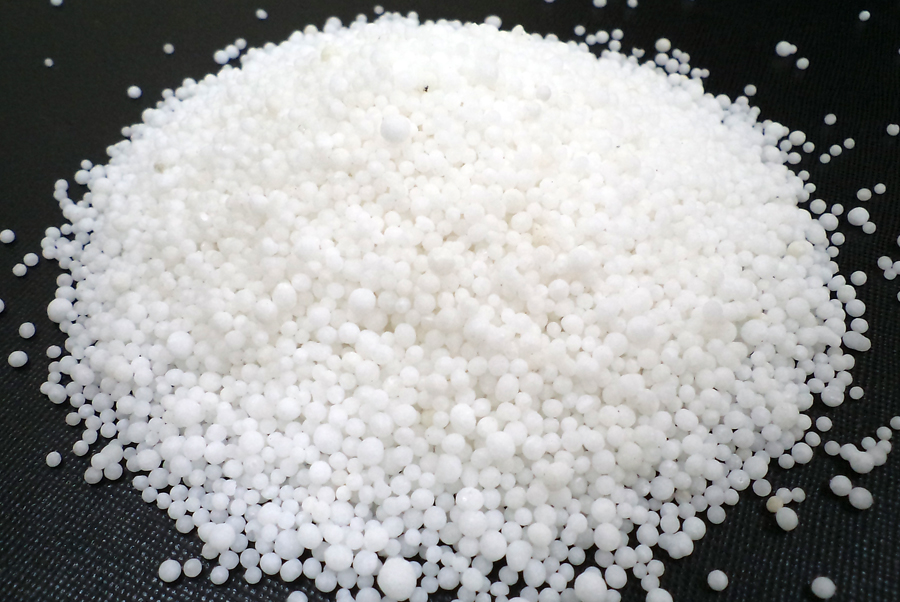
To produce granular urea fertilizer, the urea fertilizer is converted to ammonium bicarbonate and then evaporated as a gas in the soil. However, if the gas is not adequately trapped in the soil, its absorption rate will be low. In contrast, granular urea fertilizers have a lower gas evaporation rate, resulting in a 15-20% higher yield than conventional types. As a result, the production of this type of fertilizer has increased.
How to use urea fertilizer:
There are two methods for utilizing urea fertilizer, which include the following:
Spraying method:
This method involves dissolving urea in water and spraying it on the leaves and branches of plants. It is particularly useful for plants that can directly absorb urea, such as potatoes, wheat, vegetables, and soybeans.
Injection into the soil:
In this method, urea is applied to the soil, and the breakdown of urea into nitrate and ammonium is carried out by enzymes present in the soil. This process may take several weeks, but studies show that the absorption of ammonium and nitrate by plants is easier and occurs at a higher percentage.
It is important to note that using this fertilizer in high concentrations may cause plant poisoning and damage. Therefore, it is recommended to perform a soil analysis before use to obtain optimal results.
Time of use for urea fertilizer:
The appropriate time to use urea fertilizer is generally determined based on the type of soil and plant. For instance, it is added to the soil during cotton cultivation, but for vegetables, it should be applied during the growing season, and for wheat, the best time is during germination.
Although urea fertilizer can also be applied to corn, winter wheat, or any other small grain, it should be done in the cold seasons of the year. This is because, in warm periods (60 degrees Fahrenheit or higher), urea has a tendency to convert to ammonia when it comes into contact with plant materials, which can reduce nitrogen absorption by the plant.
Advantages of using this fertilizer:
- Provides plants with high levels of nitrogen and increases yield compared to other fertilizers at an affordable cost.
- It is non-flammable and non-explosive, making it easy to store.
- Can be applied as a solution by spraying or injecting it into the soil.
- Can be combined with other fertilizers, such as ammonium phosphate and diammonium phosphate. While its combination with superphosphates is not prohibited, it should be used quickly due to the release of water and the formation of moist materials, which makes transportation and application to soil difficult.
- Recommended for use in acidic soils.
What crops is this fertilizer suitable for?
This fertilizer can be used for a wide range of agricultural crops including strawberries, potatoes, corn, wheat, various citrus fruits, and even saffron. However, it is important to consider factors such as soil type and tree type when determining the appropriate amount and method of use.
Disadvantages and side effects of using urea fertilizer:
The use of urea fertilizer has several disadvantages and potential side effects. It can cause skin and eye irritation as well as respiratory effects. Prolonged exposure to the skin can result in swelling. High concentrations of urea in the blood can damage organs in the body. Urea should not be heated above its melting point as it decomposes, producing toxic vapors. Although it is not generally flammable, mixing it with strong oxidants such as nitrate can cause explosions. Additionally, it is crucial to avoid storing urea fertilizer with ammonium nitrate as they can quickly absorb water upon contact.